
A Rabbi, a Sikh priest and a Buddhist monk
 So there was a time, a rabbi, a sikh priest and a Buddhist monk (me!) was at an interfaith sharing for youths. After each of us have shared about our respective religion, a youth stood up and ask
“In light of Evolution Theory, what does Judaism have to say about it?”
The rabbi leaned forward, held up the Torah in one hand, and with the other in a firm gesture, said:
“As far as the Holy book is concerned, God created the world in seven days. Period”. And with that, he leaned back. No persuasion, no argument, just that.
There was a moment of awkward silence.
The facilitator quickly thank the rabbi and extended the question to the Sikh priest and then on to me.
While I do not agree with the rabbi’s belief, or more correctly, do not subscribe to his belief, I respect him for sticking to the text as it is. No politically correct message, cherry picking or reading between the lines. There’s always the problem of reading things too literally all the time, but that’s another article altogether.
… what we know is that if the monkey loses its prized possession “banana”, it gets upset …
There is sometimes confusion about Darwin’s Evolution Theory (DET), thinking that it explains how life started. It does not. DET explains how the plethora of species come about, evolved from single cellular living organism. Abiogensis theories attempts to explain how life started from non-living matter.
Throughout history, mankind has been quite concerned with how this world started and how it will end. Religions have offered different answers for this and it often involves one or more divine being while science over the centuries has come up with its own set of theories.
Personally, I do not know how the world come about. I do not know. But if we look at the Buddha’s discovery and teachings, it is said that there is no discernible beginning, that we have been wandering in births and deaths through our karma. Conceptually, I agree with it, but personally, I have not reached that level of cultivation to be able to say that I know it is so.
For most people, as far as religion is concerned, it is the same. Most people do not know as well. They learn it from their respective holy text and accept it … on faith. There is really nothing wrong with having faith, except if we impose that onto others or start fighting and killing over beliefs.
But I did not quite share the last paragraph that day. Perhaps I should have.
Anyway, the thing we know is this. Today, if you go to MacRitchie Reservoir park and find a monkey with a banana … … do not try to snatch its banana or peanut for that matter. You will get an angry monkey. (You will probably go down in history as the first person to snatch a banana from a monkey, but I digress)
That much we know. It does not matter how the monkey come into being. Whether it evolved from single cellular cell, or was created by God or Gods (which God?), or was planted on earth by Martians or some alien beings, or if it was designed by some Intelligent Designer, what we know is that if the monkey loses its prized possession “banana”, it gets upset.
That much we know.
If we lose our prized possessions that we become sad, upset, anguished, depressed, even as others look at our prized possessions as mere ‘banana’. And it does not matter how we come about. This is how we are currently. That we suffer when the things we are attached to is damaged or lost and it does not matter how we came about, whether we were created, designed, through abiogenesis+DET or otherwise.
That much we know.
Buddhism is more concerned with how suffering arises and cease, than how this world come about and cease.
The Dharma is not a dogma that we simply have to accept blindly on faith. It is an invitation to examine our life, our world, our suffering, the things that tick us off, make us cry, shed tears and weep. But not just that, also the things that make smile, turn our heads, delight, crave and desire.
To know suffering, it’s origin, the true end of Suffering, and the path that leads to the end of suffering.
Ehi Passiko. Come and see for yourself.
Reference
- Analysis of the Four Noble Truths
http://www.accesstoinsight.org/tipitaka/mn/mn.141.than.html
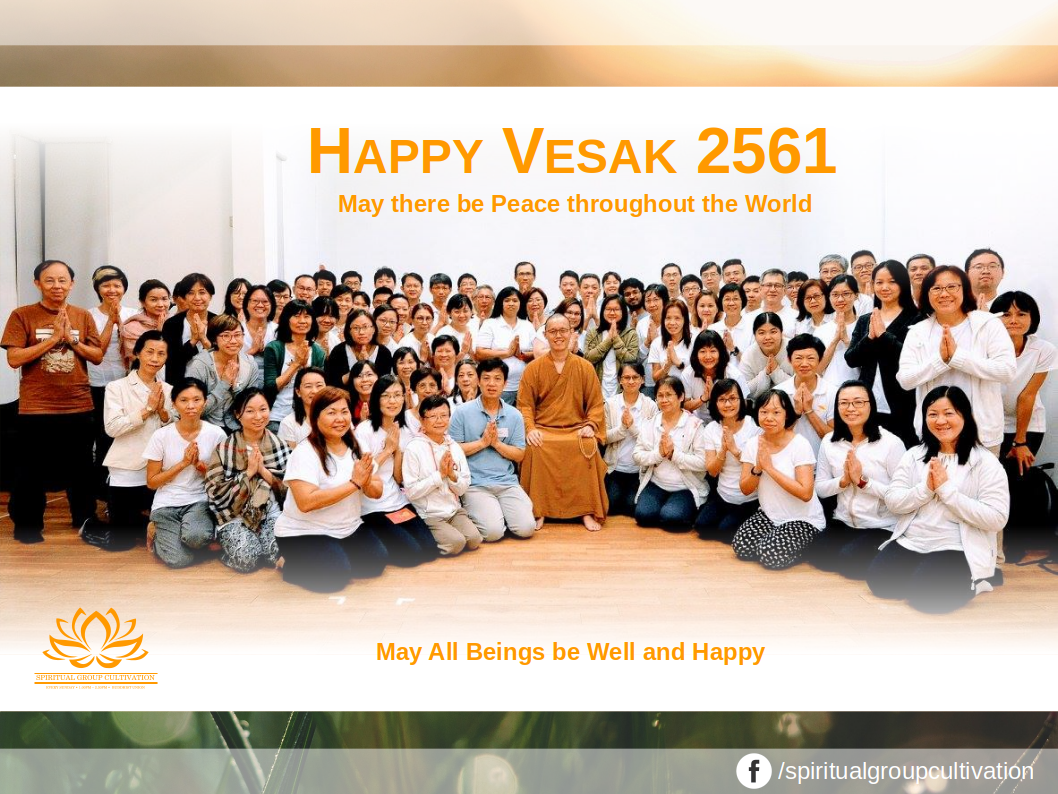
Happy Vesak 2561 :)
Happy Vesak to all!! ??☺️☺️ #vesak #joy #happiness #peaceandlove
Urban Retreat June 2017
Join us for a rejuvenating 3-day retreat in urban Singapore to refresh your body and mind.
Daily stay-out options available.
*Update* Stay-in options are fast running out.
Scroll down for retreat info.
[ REGISTER ]
Share this with your friends whom you think may benefit from it. 🙂

Urban Retreat 29 April 2017
Join us for a rejuvenating full-day retreat in urban Singapore to refresh your body and mind.
Scroll down for retreat info.
[ REGISTER ]
Share this with your friends whom you think may benefit from it. 🙂

To have Freedom to do as one pleases or to be Truly Free 自由自在
The chinese phrase “自由自在” is often translated as being carefree as is something that both young and old look forward to. Children may look forward to be free of their parents, to be free to do as they wish, while after growing up, adults hope to be free of bills and taxes. Older folks want to be free of their ill health while younger ones hope to be free of the stress of work.
Separately, “自由” means “freedom”. It is the catch phrase of modern society. To be free to say as we want, do as we please. In a way, it seems like if we are free to do all that, then we would be “自在”, that is “at ease”. So people spend time, effort and resources to have more freedom, more external freedom, so that we can be at ease.
Enlightened ones, instead, achieves “自在” at ease, through cultivation and removal of defilements. And in this way, they then have true freedom 自由 in their mind. They are free of emotional baggages, free of suffering, free to truly love and care for others without any problem.
For enlightened ones, whether or not they have external freedom or not, they can still be at ease. Whereas, most people depend on external freedom to be at ease. In the end, we do not have the real freedom. The freedom to be happy or not. The moment someone say something to annoy us, we lose our internal emotional freedom.
There is nothing wrong with external freedom. It is good to have external freedom. But if we chase after the external freedom and forget about our internal freedom, in our mind, then we are truly not free at all. We are under the ‘control’ of others. Our emotions are still under the remote control of others.
Some of the practices in Buddhism points to this but on the surface, it may not be apparent.
One example is meditation. When we meditate, we may have heard of how we are not to move, even in the face of aching back and painful legs. Why are we not free to move?
In fact, there is nothing wrong with moving. We meditate not to become a statue or wooden block.
When we experience physical discomfort during meditation, we can move (though some lineages indeed advocates absolutely non-movement). The question is whether we have that choice to move or not, or we have no choice but to move.
If we can learn to face the discomfort and examine the nature of it, then we can understand how it arises and how it ceases. We can transcend the pain and not simply have to move. Transcending the pain, the pain may go away or it may arise or become even stronger. And if there is a need, we can make a conscious mindful decision to move and not simply act on reflex.
We are not giving up our freedom to move. In fact, in this way, we have true freedom to move. Only when we learn to move or not to move, to regain back this decision, and not simply act on reflex, can we be said to have true freedom.
If we cannot even overcome a little bit of physical discomfort, then how are we able to not respond in reflex or spite to verbal or emotional abuse?
A common misconception is that we should hence never respond. We should just bear with everything in silence. This is again, contrary to what the Buddha taught. When faced with dispraise or praise, one should not simply respond with anger or joy, but should listen carefully and respond accordingly whether it is true or false. [1]
If we can do as said earlier instead, then when we are faced with real-life challenges, we can have the ability to not simply jump or strike back, but have the freedom to decide on the best course of response. Then we can do as the Buddha has taught, to respond accordingly.
So my friend, are you free?
References
[1] DN 1 – Brahmajāla Sutta: The All-embracing Net of Views
http://www.accesstoinsight.org/tipitaka/dn/dn.01.0.bodh.html