r
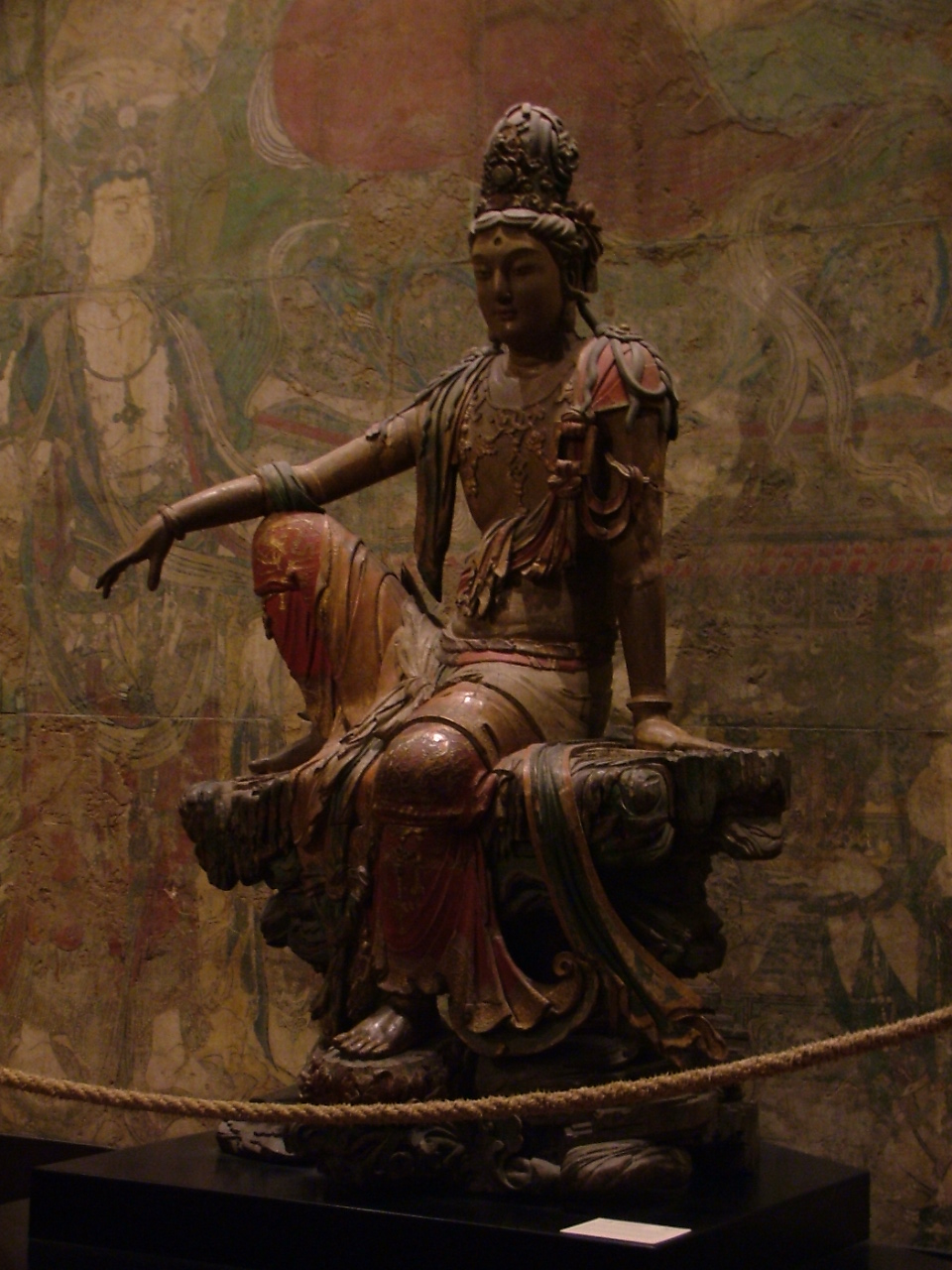

What is the Heart Sutra?
The Heart Sutra is one of the most common sutra recited in temples and monasteries worldwide.
Bite-sized Dharma on the go!
r
What is the Heart Sutra?
The Heart Sutra is one of the most common sutra recited in temples and monasteries worldwide.
When we make the beautiful dedication “May all beings be well and happy” (loosely translated from ‘Sabbe satta sukhita hontu’), do we really mean it?
Is it “May all beings be well and happy … … except those foreigners who are here in Singapore!” or is it “May all beings be well and happy … except those who were not nice to me, … but I will forgive you Tan Ah Kow for criticising my work that day … but but …” …
Almost all religion profess a message of love and peace encompassing all on earth, but there seem to always be a “but” creeping in somehow. Are we Buddhists any better? While the Four Immeasurable (Metta, Karuna, Mudita & Upekkha) is pride to be so all encompassing, they are immeasurable, are we saying our dedication with that level of commitment? Do we really mean “sabbe satta” (all beings) when we say it?
In the Buddha’s teachings, all beings is super, duper encompassing. It includes all living beings, but not living things like trees and plants (note: the Jains in Buddha’s time included plants in their list. I think they still do!). Meaning, all human beings, all heavenly beings (devas, god(s), God(s), everything in between if you will), animals, ghosts and even hell beings!
So when we say “May all beings be well and happy”, we should mean it. But realistically speaking, most of us still have not made it there yet. We should not as a result, excuse ourselves from this noble aspiration or mindset. Perhaps, it would be truer to ourselves to realise that we are not there yet, but still set consciously set our aspiration and mindset in that direction. And work towards it.
Perhaps, it is precisely because we are not quite there yet, that we tend to wish for wellness and happiness for only our friends and those who are nice to us, that we have to set ourselves towards a greater goal or path.
When I visited China last year, I happen to have the chance to observe the Beijingers. Many of them are from provinces out of Beijing, while others are native Beijingers. Watching them, my mind start to filter out the cultural nuances. Their slang and accent start to be appreciated
as a unique part of who they are and not an alien aspect as some might find. And occasionally, I overhear (trust me, you just cannot help it but hear them!) their conversation and for all that matters, it seems like they are very much like Singaporeans, with our dreams and hopes, our little petty quibbles at work and our simple pursuit of happiness.
I came away from that trip having a much deeper sense of connection with Chinese people than before. Maybe it helps that I have met more Chinese nationals over the past few years than I have in my whole life. The result is that a part of me feels more empathy for them. Maybe a bit more loving kindness and compassion if you will.
They are definitely not just from China anymore. They are fellow human beings in Singapore, fellow sentient beings in samsara.
*~~~~~*
It is easier to demonise faceless strangers; it is harder to demonise your friends.
Sabbe satta sukhita hontu! May all beings be well and happy! ^_^
Dear friends,
Here’s an update on the Yogacarabumi sastra translation.
http://buddhavacana.net/yogacara-bumi-sastra/ch20-cultivation/
It contains the full translation of the whole chapter and I am doing a final review of it with my fellow Dharma brother.
Should be complete in a month’s time or so.
Please email me if you find any typo or incorrect translations.
Thank you.
Sabbe satta sukhita hontu! ^_^
Eight Precepts Meditation Retreat 八关斋禅一

Organised by Samadhi Buddhist Society 由 禅 定 佛 学 会 主 办
22nd April 2011 @ Tai Pei Buddhist Centre 四 月 二 十 二 日二 零 一 一 年 于 大 悲 佛 教 中 心
Program 节 目 表
6.45 am
Arrival, Registration and Breakfast for preceptors @ Tai Pei Buddhist Centre
受 八 关 斋 戒 信 众 集 中 在 大 悲 佛 教 中 心
7.00 am
Briefing to preceptors
参 加 八 关 斋 戒 说 明 会
7.15 am
Observance of Eight Precepts, Vandana and Meditation on Nine Virtues of the Buddha
诵 念 “礼 敬 佛 陀” 和 受 八 关 斋 戒
7.45 am
Meditation by Ven. Chuan Guan
静 坐
9.15 am
Tea Break
茶 点
9.45 am
Dhamma Talk by Prof Sumanapala Galmangoda
佛 理 讲 座
11.00 am
Buddha Puja and Dana (Lunch)
供 佛 与 午 餐
12.30 pm
Group Photographs and Self-Cultivation
全 体 照 与 自 修
1.00 pm
Meditation – Chanting of the Nine Virtues of the Buddha (108 Times Prayer)
静 坐 – 诵 读 108 遍 九 大 佛 功 德 经
2.00 pm
Dhamma Talk by Ven. Punnaji
敬 请 明 圆 师 父 开 示
3.00 pm
Tea Break
茶 点
3.30 pm
Dhamma Discussion – Ven. Seeha, Ven. Punnaji, Ven. Chuan Guan and Prof Sumanapala Galmangoda
佛 理 讨 论
5.30 pm
Chanting of Dhammacakkappavattana Sutta – First Sermon of The Buddha
诵【传法轮经】- 佛陀首部经
6.30 pm
End of Retreat, Observance of Five Precepts and Distribution of holy thread
八 关 斋 戒 功 德 圆 满
Dharma Circle – Beyond NUS Buddhist Society (or NUS)
http://www.facebook.com/event.php?eid=214377901912226
Speaker: Venerable Bodhi
The sharing will focus on three aspects of a person’s life – professional, interpersonal and spiritual and how an NUSBS member (NUS student or a layman) can continue to develop these in the real work-life balance.
Speaker Profile
Venerable Bodhi holds a Phd in Buddhist studies from the University of Kelaniya, Sri Lanka. Prior to that, she graduated from our local university. She has been teaching in the Buddhist Library, for both the diploma and post-graduate diploma classes.
Complimentary dinner provided.
To register for the dinner please email your name, contact number to Johan at dharma@nusbs.org.sg
or sms to 84209648 by 6th April.
For more information, please visit www.nusbs.org.sg
So we started off with wood for our tools and made many things with it. We chose the trees that are strong and durable. That was good for awhile. Then we dried them, treated & processed them and made them last longer. Along the way, we also used stone. Oh, stone is so much harder and last longer. But it was not as malleable as wood. So we used both for a long time, complementing each other.
We then discovered smithing and started using copper, tin, bronze, iron and many others. Along the way, we developed and learnt how to make them stronger and more durable. With each innovation, we found a way to prevent them from rusting, from breaking down.
Beyond wood, stone and metal, we also used glass and clay. Unlike wood, glass and clay can be molded into various shapes needed. Strong and yet lighter than metal, it was great. But they were brittle. Very brittle. Modern tempered glass can be made stronger, but then it is heavy.
Then we invented a magical material.
It was malleable and yet hard. If you needed, soft variants can be made. You can make it into thin strands like cotton thread, or have them shaped into bigger stronger structures if needed. And it was durable. It would not decay or rot like wood, nor rust like metal. It was water resistant and can have high heat tolerance if needed. You can even shape it the way you want it. Exactly. Precisely. It was the perfect, magical material.
We invented plastic.
Now we have the ideal material that allowed us to do whatever we want. Perfect ideal material. Magical. Only problem: We are too successful in our pursuit. Most plastics will outlast several generations of human beings.
Some people say that we should bring our own bags when we go to the market or mall. I agree. But I think many Singaporeans reuse that *ntuc* plastic bag as trash bag. If we bring our own bags, we will end up buying trash bags, which we are presently not buying.
The problem is that we cannot see across time and space. We can only see what is near, so it is hard to visualise how the whole earth is changing because of our habits. We also cannot see these changes to our environment because we do not have the patience, energy or ability to watch over a span of several months or years. And even if we could, we mostly lack the ability to see the patterns within what we observe.
We are unable to link our habits (cause) with the environment harm (results).
The same goes for the Law of Karma. Untrained, it is not easy for us to see directly the functioning of karma. But if we train our mind to be more observant, calm and mindful, we can start to see the patterns emerging. Patterns of wholesome actions
leading to happiness, peace and calm, and patterns of unwholesome actions leading to sorrow, lamentation, pain, distress and despair.
To observe the long term effects of our actions on the environment, scientists take sample data from various environment metrics to develop a model. Through this model, they can approximate and project the possible impact of our actions before it occurs. So far, the picture is not a pretty one. We are going into our 59th minute or 11th hour. Our time is running out.
The world as a whole need to rethink how we use the earth’s resources. It is not an finite source unlike the US dollar (or other currency) which the US treasury can simply print more green back and flood the market with it. If a certain natural resource run low or run out, we cannot simply produce more of it. Natural resources cannot be manufactured so to speak. It can only be replenished over time as nature take its course. A broken wooden chair when left to the element, decay and rot over time. Its constituent parts, be it the four elements or its hydrocarbon molecules, break down as it interacts with the environment. Over time, a chair that is untreated will totally disintegrate and so call ‘disappear’; the ‘chair’ disappeared’ but the elements move on in this earth, is absorbed or combine with other entities. This process of decay and decomposition do not speed up just because scientific advances allowed us to speed up the manufacturing process.
Scientists are also trying to speed up the decomposition by tweaking certain bacteria to act on certain ‘protein’ in plastic, and a teen managed to do just that. “The Waterloo, Ontario high school junior figured that something must make plastic degrade, even if it does take millennia, and that something was probably bacteria.”
It all boils down to control. We want changes that suit us. But nature has other plans. This very physical world has other plans. It will change, not according to our whims and fancy. It will change only according to conditions. In a simplistic sense, science is really about understanding this world so that we can steer how it changes in order to satisfy our needs and wants. When we want it not to change, we paint it, lacquer it, glaze it, electroplate it, wrap it with vinyl, enshrine it in glass or make it chemically inert. If we want it to change, we heat it up, toss it around, dissolve it, charge it, or even send our bacterial minions to do our bidding.
Scientists in some ways are like the Buddha. They try to know and understand this world to make our life easier, better, without so much stress and suffering. Difference is that the Buddha discovered that the nature of this world is that it is impermanent, subject to change and cannot be controlled by any single entity, but goes in a constant flux of transitions according to conditions. Instead of changing the world, the Buddha realised that we have to change ourselves. By reducing our craving and attachment, our suffering reduces, by realising the true nature of all phenomena, one’s habit of delighting, craving and attachment / control subsides and ceases. With that, suffering also ceases.
Scientists instead went the other way to change the world.
As I type on this keyboard, made mainly of plastic, I wonder how we can balance between changing the world and changing ourselves. Each of us have to find that balance that work for us at this moment. I just hope we find that balance sooner.
So, which part of “All conditioned phenomena are subject to change” do we not understand?
References